
%20--%3e%3csvg%20version='1.1'%20id='Layer_1'%20xmlns='http://www.w3.org/2000/svg'%20xmlns:xlink='http://www.w3.org/1999/xlink'%20x='0px'%20y='0px'%20viewBox='0%200%2042%2042'%20style='enable-background:new%200%200%2042%2042;'%20xml:space='preserve'%3e%3cstyle%20type='text/css'%3e%20.st0{fill:%23FAF4EB;}%20.st1{fill:none;}%20.st2{fill:%2307161C;}%20.st3{fill:none;stroke:%23000000;stroke-width:3;}%20%3c/style%3e%3ccircle%20class='st0'%20cx='21.1'%20cy='21.2'%20r='20.4'/%3e%3cpath%20class='st1'%20d='M21,0c11.6,0,21,9.4,21,21s-9.4,21-21,21S0,32.6,0,21S9.4,0,21,0z'/%3e%3cpath%20class='st2'%20d='M21,1C10,1,1,9.9,1,21c0,2.7,0.5,5.3,1.6,7.8C5.7,36.2,13,41,21,41c11,0,20-8.9,20-20c0-2.7-0.5-5.3-1.6-7.8%20C36.3,5.8,29,1,21,1%20M21,0c11.6,0,21,9.4,21,21s-9.4,21-21,21S0,32.6,0,21S9.4,0,21,0z'/%3e%3cpath%20class='st3'%20d='M31.4,21H9.8'/%3e%3cpath%20class='st3'%20d='M17.2,13.6L9.8,21l7.4,7.4'/%3e%3c/svg%3e)
The Naming Game in Branding
By Spencer Buck, Founder & CCO
28. 05. 2024
By Spencer Buck, Founder & CCO
28. 05. 2024
However, naming a new product or service has become more challenging than ever—not due to a lack of creativity, but because of the difficulty in finding an ownable name. And then, of course, a name that transcends negative historical meanings, global misinterpretations, or associations that extend far beyond the dictionary definition.
But when you get it right, the power of a name to influence its global positioning and connect with your audience is priceless. Airbnb, Netflix, Innocent, and Tesla—these names not only defined their respective offerings but helped build entire brand cultures.
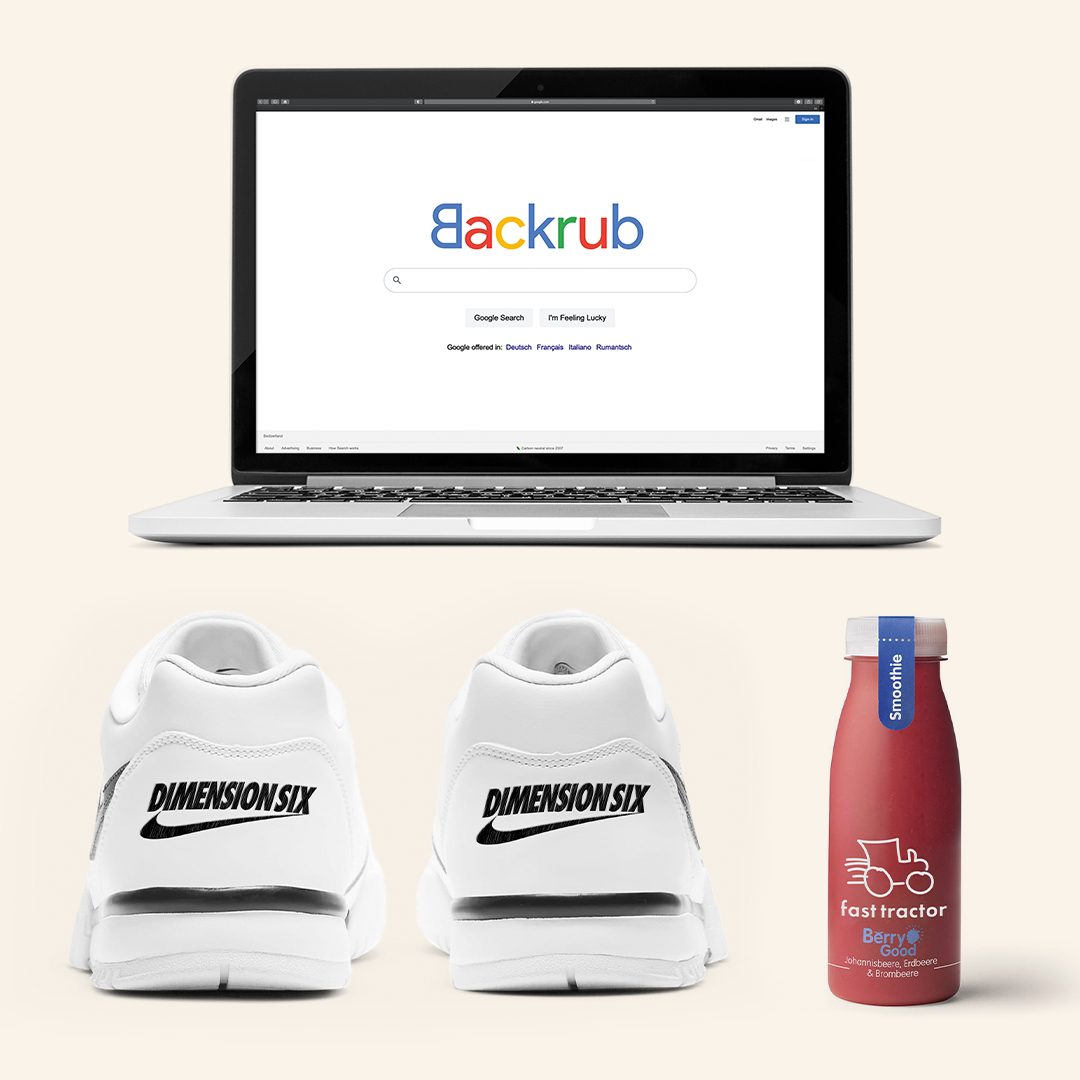
But let’s pause and think about some famous brands that might never have seen fame due to a poorly considered name. Can you imagine ‘Backrubbing’ instead of ‘Googling’? Backrub was Google’s initial name. And would ‘Backrubbing’ have been embraced as the verb we now use daily, hourly? Or how about popping on a pair of Dimension Six? Nah, I’ll stick with my Nikes, thanks. Fancy a healthy swig of Fast Tractor? Yuck. ‘Innocent’ makes for a much more pleasant mouthful.
And there are established brands that have had to alter their meaning over time. Weight Watchers became an unwelcome reminder of an outdated and damaging mindset until it renamed itself WW to reflect the importance of wellness, not weight.
For many famous brands, naming probably just happened—without much deep thinking attached. Their founders inspired their brand names: Guinness, Cadbury, Coors—or perhaps their place of origin: Canada Dry, Air New Zealand, British Gas. Some brands emerged from completely arbitrary beginnings that just felt right. Steve Jobs' visit to an apple orchard inspired Apple, later post-rationalised with a techy association to the apple ‘byte’ mnemonic. An infamous character in Moby Dick gave Starbucks its name. Its relevance to the product? According to Starbucks, the name evokes the romance of the high seas and the seafaring tradition of early coffee traders. Nice. Abstract, but nice.
These brand names have stood the test of time, but evolving business needs often challenge this legacy. As brands expand into new categories, they must carefully balance relevance with ownership. The key questions are: Can this brand permissibly operate in this space? Is this proprietary to us? Does it elevate us?
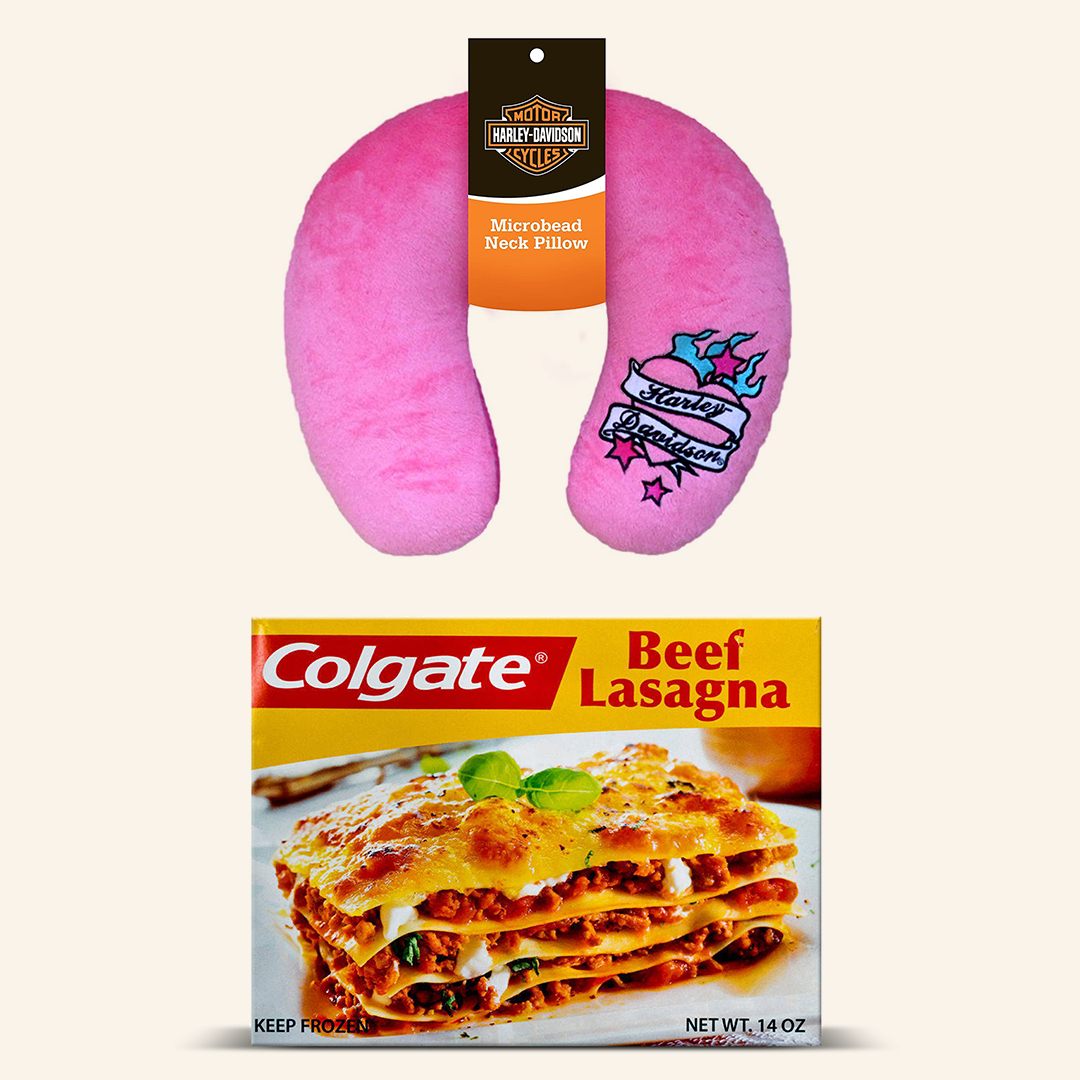
A good (or bad) example is Colgate’s failed attempt to launch ready meals under its well-known toothpaste brand in the ‘80s. While the idea of ‘health’ was the red thread, Colgate’s name is associated solely for its minty fresh oral hygiene—not food. Ever.
Does Colgate have permission to play in healthy meals? No. Is the idea of healthy meals ownable to Colgate? No. Does it elevate the Colgate brand? No. Similarly, Harley-Davidson's foray into pink neck pillows (among other missteps) demonstrates a brand trying to generate more revenue but creating a disconnect with its core audience and purpose. The Harley-Davidson name conjures a certain lifestyle that’s in stark contrast to fluffy neck pillows. Q: What were they both thinking?! A: They weren’t thinking.
What is crucial is that the parameters—the guardrails—of a brand are clearly defined to keep it on the right track. A robust strategy that protects the name and well-defined portfolio architecture are essential. These determine the role of the parent brand across its subsidiaries—when it should take centre stage and when it should remain the subsidiary brand’s silent partner.
A business that does this exceptionally well is Mars. It’s both the name of the parent company and a delicious chocolate bar brand. Yet, financially, its most successful brand, Pedigree, is a nutrition brand for dogs—a long way from its confectionary origins (and a good thing, too, since chocolate is poisonous for dogs).
Similarly, one of the world’s most successful electronics companies, Samsung, was first known for producing noodles. Even today, the breadth of its subsidiaries includes an amusement park and luxury hotels. Still, the Samsung name has never stretched into these disparate spaces. Their amusement park brand is Everland. Their hotel brand is Shilla. No doubt they are both powered by Samsung products, but they can express themselves in a way that avoids confusion: No misunderstanding. No dilution of equity.
%20--%3e%3csvg%20version='1.1'%20id='Layer_1'%20xmlns='http://www.w3.org/2000/svg'%20xmlns:xlink='http://www.w3.org/1999/xlink'%20x='0px'%20y='0px'%20viewBox='0%200%201220%20255'%20style='enable-background:new%200%200%201220%20255;'%20xml:space='preserve'%3e%3cstyle%20type='text/css'%3e%20.st0{fill:%23FAF4EB;}%20%3c/style%3e%3cpath%20class='st0'%20d='M243.7,250.7h42.9l34-63.6l34.3,63.6h43l-55.6-99.8l51.3-93.1h-42.4l-30.6,56.2l-30.2-56.2h-43l51.9,93.1%20L243.7,250.7z'/%3e%3cpath%20class='st0'%20d='M446.4,0.8h-39v42.4h39V0.8z'/%3e%3cpath%20class='st0'%20d='M446.4,57.8h-39v192.9h39V57.8z'/%3e%3cpath%20class='st0'%20d='M98.5,218.5c-13.4,2.2-22.7,1-28.2-3.6c-4.5-3.8-6.7-10.9-6.7-19.4L63.2,88.3h35V57.8h-35l0.5-56.9H25.8%20l-0.5,56.9l-25.1,0v30.5h23.9c0,0,0.5,79.5,0.5,116.2c0,16.7,4.7,29.1,13.9,37.1c12.1,10.4,31.8,13.4,60.1,9.2L98.5,218.5z'/%3e%3cpath%20class='st0'%20d='M595,88.3h23.9c0,0,0.5,79.5,0.5,116.2c0,16.7,4.7,29.1,13.9,37.1c12.1,10.4,31.8,13.4,60.1,9.2%20c0-6.8,0-27.3,0-32.2c-13.4,2.2-22.7,1-28.2-3.6c-4.5-3.8-6.7-10.9-6.7-19.4l-0.5-107.2h35V57.8h-35l0.5-57h-37.8l-0.5,56.9H595%20L595,88.3z'/%3e%3cpath%20class='st0'%20d='M1080.1,184.9c0,37.7,29.7,69.7,69.8,69.7c39.7,0,69.6-32.3,69.6-69.7c0-3.9,0.2-37.8,0.2-59.1%20c0-37.7-29.7-69.7-69.8-69.7c-39.7,0-69.6,32.3-69.6,69.7C1080.3,129.7,1080.1,163.6,1080.1,184.9z%20M1121.1,118.5%20c0-13.9,9.5-31.9,29-31.9c19.7,0,28.8,17.9,28.8,31.9c0,2.7,0.2,72.9,0.2,72.9c0,14.8-9.5,32.8-29.5,32.8c-19.7,0-28.5-18.1-28.5-32%20V118.5z'/%3e%3cpath%20class='st0'%20d='M465.2,183.3V196c0,23.4,20,56.4,64.4,56.4c37.5,0,64.7-22.7,64.7-54c0-24.8-8.6-44.4-50.5-59.5l-4.2-1.5%20c-22.6-8.1-35.1-12.5-35.1-30.5c0-12.3,10-20.9,24.4-20.9c7.2,0,23.9,2.6,23.9,27.2v4.6h36.7v-4.2c0-34.4-24.1-57.4-59.9-57.4%20c-34.5,0-61.6,22.8-61.6,51.8c0,29.5,16.2,47.1,54.2,58.8c20.7,6.4,33.5,13.9,33.5,31.6c0,22.4-18.6,24.2-24.3,24.2%20c-20.8,0-28.4-20.4-28.4-34.1v-5.1L465.2,183.3z'/%3e%3cpath%20class='st0'%20d='M922.7,56.3c-36.1,0-58.5,26.5-58.5,69.1c0,18.9,0,28,0,36c0,6.4,0,12.1,0,21.5c0,51.2,30.2,69.5,58.4,69.5%20c20.2,0,34.1-15.2,37-20.8l0.6-1.2l7.8,20.3h29.8V0.8h-38.9v75.5l-1.2-1.9C955.2,70.1,945.2,56.3,922.7,56.3%20M932.2,222.7%20c-16.5,0-29-13.1-29.1-30.6c0-2.8,0-75.5,0-75.5c0-18.8,15-30.5,28.9-30.5c16.7,0.1,25.7,14.2,26.9,27.3v81.9%20C958.9,206.7,948.8,222.7,932.2,222.7L932.2,222.7z'/%3e%3cpath%20class='st0'%20d='M749.1,57.8h-39.3v124.8c0,33.8,15.5,69.8,58.8,69.8c21.7,0,34.9-16.7,37-20.8l0.6-1.2l7.8,20.3h30V57.8h-39.1%20v137.4c0,6.7-3.4,14.5-8.8,19.8c-2.3,2.4-5.1,4.3-8.2,5.6c-3.1,1.3-6.4,2-9.7,2h-0.1c-16.7-0.1-29.2-13.2-29.2-30.6L749.1,57.8z'/%3e%3cpath%20class='st0'%20d='M179.1,86.3c11.6,0,19.5,7.2,19.5,18c0,17.3-20.4,25.7-32.7,30.8c-1.9,0.8-8.1,3.5-9.8,4.3%20c-18.1,7.9-48.4,21.2-48.4,57.6c0,34.8,19.7,55.5,52.8,55.5c27,0,39-22.1,39-22.1l7.9,20.3h29.9l0.1-142.2%20c0-33.2-21.6-52.3-59.2-52.3c-37.3,0-64.3,24.3-64.3,57.7v4.2c13.6,0,34.2,0,38.1,0v-3.5C151.9,100.9,159,86.3,179.1,86.3z%20M170.3,222.6c-15.6,0-24.9-8.9-24.9-23.9c0-18.1,16.5-26.9,31.1-34.6c8.4-4.4,16.3-8.6,20.9-14.2l1.1-1.4V189%20C198.4,210.1,187.9,222.6,170.3,222.6'/%3e%3cpath%20class='st0'%20d='M1060.5,0.8h-39v42.4h39V0.8z'/%3e%3cpath%20class='st0'%20d='M1060.5,57.8h-39.1v192.9h39.1V57.8z'/%3e%3c/svg%3e)