
%20--%3e%3csvg%20version='1.1'%20id='Layer_1'%20xmlns='http://www.w3.org/2000/svg'%20xmlns:xlink='http://www.w3.org/1999/xlink'%20x='0px'%20y='0px'%20viewBox='0%200%2042%2042'%20style='enable-background:new%200%200%2042%2042;'%20xml:space='preserve'%3e%3cstyle%20type='text/css'%3e%20.st0{fill:%23FAF4EB;}%20.st1{fill:none;}%20.st2{fill:%2307161C;}%20.st3{fill:none;stroke:%23000000;stroke-width:3;}%20%3c/style%3e%3ccircle%20class='st0'%20cx='21.1'%20cy='21.2'%20r='20.4'/%3e%3cpath%20class='st1'%20d='M21,0c11.6,0,21,9.4,21,21s-9.4,21-21,21S0,32.6,0,21S9.4,0,21,0z'/%3e%3cpath%20class='st2'%20d='M21,1C10,1,1,9.9,1,21c0,2.7,0.5,5.3,1.6,7.8C5.7,36.2,13,41,21,41c11,0,20-8.9,20-20c0-2.7-0.5-5.3-1.6-7.8%20C36.3,5.8,29,1,21,1%20M21,0c11.6,0,21,9.4,21,21s-9.4,21-21,21S0,32.6,0,21S9.4,0,21,0z'/%3e%3cpath%20class='st3'%20d='M31.4,21H9.8'/%3e%3cpath%20class='st3'%20d='M17.2,13.6L9.8,21l7.4,7.4'/%3e%3c/svg%3e)
Designing Your Brand for Growth
By Spencer Buck, Founder & CCO
08. 12. 2022
By Spencer Buck, Founder & CCO
08. 12. 2022
From premium beauty to luxury booze, the minutiae of brand identity and retail design remain critical components of success for some of the most globally recognisable brands and businesses today.
There’s beauty in being small. The rise of independent ventures across every industry is a testament to this. These businesses seem to offer a refreshing alternative to the soullessness of mass-produced goods. They resonate with today’s ever-wary consumer—those who seek purer, more earnest expressions of quality, craftsmanship, and individuality. It’s easier for independent entities to stay true to their authentic founding values.
However, every small business dreams of scaling up. A taste of domestic success often leads to ambitions of international expansion. To make this leap, product innovation, a consistent global marketing strategy, and the agility to adapt to diverse market tastes are essential. And design—whether through retail presence or brand identity—is critical to unlocking global success.
To dwell in the mind of the consumer is a powerful means of securing brand loyalty, driving business sustainability, and fostering brand advocacy—not just in the long term, but for life. Only exceptional design thinking can truly achieve this. Because its power to persuade is so compelling, new and fledgling businesses seeking to break into a market, gain distribution, or fuel international growth must place trust in reconciling design with ROI, understanding the catalysing role it plays in their ambition to conquer their categories… and the world.
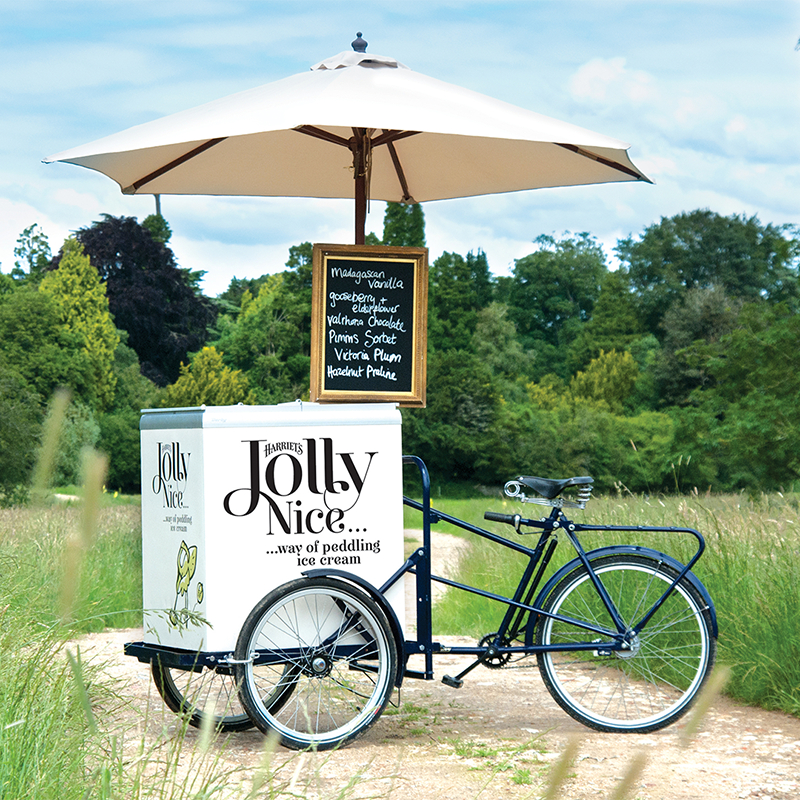
A strong brand identity can also transform a struggling business. Take Jolly Nice, a British ice cream brand. Originally named Westonbirt Ice Cream, the brand underwent a complete overhaul, from the name to the visual design, making it competitive against established luxury brands. The result? A product that could finally contend with the most established luxury brands in the market, earning listings in two major national supermarkets and other smaller retailers.
But it’s not just start-ups that need to nail brand identity. Large companies, too, are at risk of losing market share to smaller, more agile contenders. Global giants must remain relevant and adaptable in response to consumer trends, especially in increasingly competitive markets.
Global water brand Highland Spring is a case in point. With the rise of health-conscious and socially aware consumers, the bottled water market has become increasingly competitive. The brand titan needed a structural and visual identity refresh to stay relevant and competitive in a saturated marketplace. The new brand design repositioned the product as a modern Scottish classic, generating an ROI of 113:1—equating to a 20.02% volume sales increase. It also delivered 16% growth in the water category, and the brand outperformed the total bottled water market by 12.2%, helping it regain its position as the number one bottled brand in the UK. A brand refresh catalysed this commercial growth.
Brand design is about more than just aesthetics—it’s about solving business challenges. To create unforgettable brands, businesses must first identify the obstacles blocking their success. This insight provides the foundation for developing effective brand expressions. Ideas should be tested, refined, and validated at every stage, ensuring that the final design achieves the intended commercial impact.
Effective brand design can make or break a business. It elevates a brand above its competitors, influences consumer behaviour, and communicates the values that define its purpose. In today’s values-driven world, this is more important than ever. By blending creativity with strategic insight, brands can use design not just to stand out, but to conquer new markets and achieve lasting success.
As the planet heats up, so does the conversation around sustainable packaging. But it’s not just about making sure packs are recyclable—it’s about making recycling easy. People are inherently lazy, and changing their recycling habits is tough (sadly, saving the planet isn’t always a priority when effort is involved). So, the responsibility falls on brand owners to ensure that the packaging they introduce meets rising sustainable demands.
Those who get it right gain a significant competitive advantage, thanks to the feel-good factor that fosters both loyalty and, more powerfully, advocacy. The psychology is simple: we all want to feel a little better about our consumption habits. Yet, few of us are ready to fully commit to a green lifestyle—especially if it compromises convenience. That’s where the tension lies.
One brand that’s getting it right is Finisterre. A friend of mine, a long-time loyal customer, couldn’t stop raving about them (advocacy). Intrigued by their impressive sustainability credentials, I ordered a pair of shorts online. They arrived in a paper bag—check. But inside the paper package was a plastic bag. My initial scepticism soon turned to delight when I discovered that this ‘plastic’ was made from an innovative polymer that dissolves in water, is non-toxic, and marine-safe.
Now, contrast that with a well-known online food courier service. Every rider—over 110,000 and counting—receives their uniform in several non-recyclable plastic bags. Add to that the fact they deliver meat-based food using petrol and diesel vehicles, and their green credentials plummet.
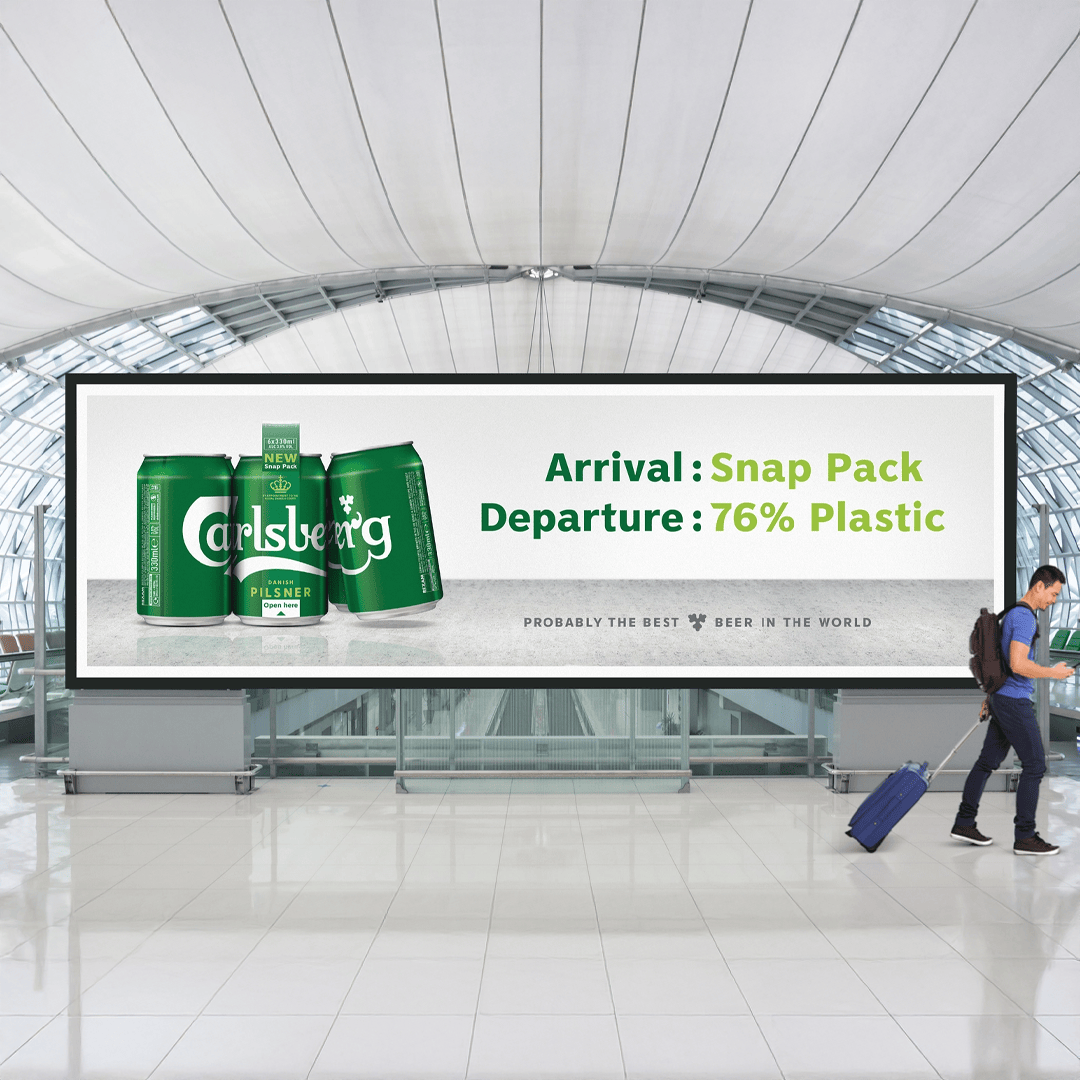
But let’s end on a high note. Carlsberg is a brand that’s making waves in sustainable packaging. A few years ago, they launched Snap Pack, an innovative solution that reduces up to 76% of plastic by eliminating the notorious six-pack rings. Instead, glue dots hold the cans together. Simultaneously, they introduced their Greener Green ink, addressing the fact that green ink, ironically, is among the least eco-friendly options. Since Carlsberg’s iconic brand colour is green, they developed a more sustainable ink that is Cradle to Cradle Certified.
This initiative aligns perfectly with Carlsberg’s mission to prove they’re probably the best beer in the world. The social media buzz that followed shows that when sustainability aligns with a brand’s values, it resonates—especially for Carlsberg, one of the world’s most innovative brands both on and offline.
It’s fair to assume that another beer giant, Molson Coors, took inspiration from Carlsberg’s bold move. This week, they launched their ‘Plastic-Free Future Mart’ pop-up in Brooklyn, New York, showcasing their move toward fully recyclable, sustainably sourced cardboard carriers. As the largest beer brand in North America, cutting out plastic rings is a significant step forward.
When household-name brands take bold action on sustainability, it pushes the issue higher up the agenda for others. Those who act early with meaningful sustainable solutions gain a competitive edge—especially when those efforts align with their brand values. A sobering thought for the likes of Amazon, let’s hope. A final point: sustainable brand design is more than just supply chain, reduction and recyclability; it’s about creating enduring brand design. When the right people come together to create unforgettable brand work, brands by their very nature become more sustainable, less revamps are needed, less waste is created.
%20--%3e%3csvg%20version='1.1'%20id='Layer_1'%20xmlns='http://www.w3.org/2000/svg'%20xmlns:xlink='http://www.w3.org/1999/xlink'%20x='0px'%20y='0px'%20viewBox='0%200%201220%20255'%20style='enable-background:new%200%200%201220%20255;'%20xml:space='preserve'%3e%3cstyle%20type='text/css'%3e%20.st0{fill:%23FAF4EB;}%20%3c/style%3e%3cpath%20class='st0'%20d='M243.7,250.7h42.9l34-63.6l34.3,63.6h43l-55.6-99.8l51.3-93.1h-42.4l-30.6,56.2l-30.2-56.2h-43l51.9,93.1%20L243.7,250.7z'/%3e%3cpath%20class='st0'%20d='M446.4,0.8h-39v42.4h39V0.8z'/%3e%3cpath%20class='st0'%20d='M446.4,57.8h-39v192.9h39V57.8z'/%3e%3cpath%20class='st0'%20d='M98.5,218.5c-13.4,2.2-22.7,1-28.2-3.6c-4.5-3.8-6.7-10.9-6.7-19.4L63.2,88.3h35V57.8h-35l0.5-56.9H25.8%20l-0.5,56.9l-25.1,0v30.5h23.9c0,0,0.5,79.5,0.5,116.2c0,16.7,4.7,29.1,13.9,37.1c12.1,10.4,31.8,13.4,60.1,9.2L98.5,218.5z'/%3e%3cpath%20class='st0'%20d='M595,88.3h23.9c0,0,0.5,79.5,0.5,116.2c0,16.7,4.7,29.1,13.9,37.1c12.1,10.4,31.8,13.4,60.1,9.2%20c0-6.8,0-27.3,0-32.2c-13.4,2.2-22.7,1-28.2-3.6c-4.5-3.8-6.7-10.9-6.7-19.4l-0.5-107.2h35V57.8h-35l0.5-57h-37.8l-0.5,56.9H595%20L595,88.3z'/%3e%3cpath%20class='st0'%20d='M1080.1,184.9c0,37.7,29.7,69.7,69.8,69.7c39.7,0,69.6-32.3,69.6-69.7c0-3.9,0.2-37.8,0.2-59.1%20c0-37.7-29.7-69.7-69.8-69.7c-39.7,0-69.6,32.3-69.6,69.7C1080.3,129.7,1080.1,163.6,1080.1,184.9z%20M1121.1,118.5%20c0-13.9,9.5-31.9,29-31.9c19.7,0,28.8,17.9,28.8,31.9c0,2.7,0.2,72.9,0.2,72.9c0,14.8-9.5,32.8-29.5,32.8c-19.7,0-28.5-18.1-28.5-32%20V118.5z'/%3e%3cpath%20class='st0'%20d='M465.2,183.3V196c0,23.4,20,56.4,64.4,56.4c37.5,0,64.7-22.7,64.7-54c0-24.8-8.6-44.4-50.5-59.5l-4.2-1.5%20c-22.6-8.1-35.1-12.5-35.1-30.5c0-12.3,10-20.9,24.4-20.9c7.2,0,23.9,2.6,23.9,27.2v4.6h36.7v-4.2c0-34.4-24.1-57.4-59.9-57.4%20c-34.5,0-61.6,22.8-61.6,51.8c0,29.5,16.2,47.1,54.2,58.8c20.7,6.4,33.5,13.9,33.5,31.6c0,22.4-18.6,24.2-24.3,24.2%20c-20.8,0-28.4-20.4-28.4-34.1v-5.1L465.2,183.3z'/%3e%3cpath%20class='st0'%20d='M922.7,56.3c-36.1,0-58.5,26.5-58.5,69.1c0,18.9,0,28,0,36c0,6.4,0,12.1,0,21.5c0,51.2,30.2,69.5,58.4,69.5%20c20.2,0,34.1-15.2,37-20.8l0.6-1.2l7.8,20.3h29.8V0.8h-38.9v75.5l-1.2-1.9C955.2,70.1,945.2,56.3,922.7,56.3%20M932.2,222.7%20c-16.5,0-29-13.1-29.1-30.6c0-2.8,0-75.5,0-75.5c0-18.8,15-30.5,28.9-30.5c16.7,0.1,25.7,14.2,26.9,27.3v81.9%20C958.9,206.7,948.8,222.7,932.2,222.7L932.2,222.7z'/%3e%3cpath%20class='st0'%20d='M749.1,57.8h-39.3v124.8c0,33.8,15.5,69.8,58.8,69.8c21.7,0,34.9-16.7,37-20.8l0.6-1.2l7.8,20.3h30V57.8h-39.1%20v137.4c0,6.7-3.4,14.5-8.8,19.8c-2.3,2.4-5.1,4.3-8.2,5.6c-3.1,1.3-6.4,2-9.7,2h-0.1c-16.7-0.1-29.2-13.2-29.2-30.6L749.1,57.8z'/%3e%3cpath%20class='st0'%20d='M179.1,86.3c11.6,0,19.5,7.2,19.5,18c0,17.3-20.4,25.7-32.7,30.8c-1.9,0.8-8.1,3.5-9.8,4.3%20c-18.1,7.9-48.4,21.2-48.4,57.6c0,34.8,19.7,55.5,52.8,55.5c27,0,39-22.1,39-22.1l7.9,20.3h29.9l0.1-142.2%20c0-33.2-21.6-52.3-59.2-52.3c-37.3,0-64.3,24.3-64.3,57.7v4.2c13.6,0,34.2,0,38.1,0v-3.5C151.9,100.9,159,86.3,179.1,86.3z%20M170.3,222.6c-15.6,0-24.9-8.9-24.9-23.9c0-18.1,16.5-26.9,31.1-34.6c8.4-4.4,16.3-8.6,20.9-14.2l1.1-1.4V189%20C198.4,210.1,187.9,222.6,170.3,222.6'/%3e%3cpath%20class='st0'%20d='M1060.5,0.8h-39v42.4h39V0.8z'/%3e%3cpath%20class='st0'%20d='M1060.5,57.8h-39.1v192.9h39.1V57.8z'/%3e%3c/svg%3e)